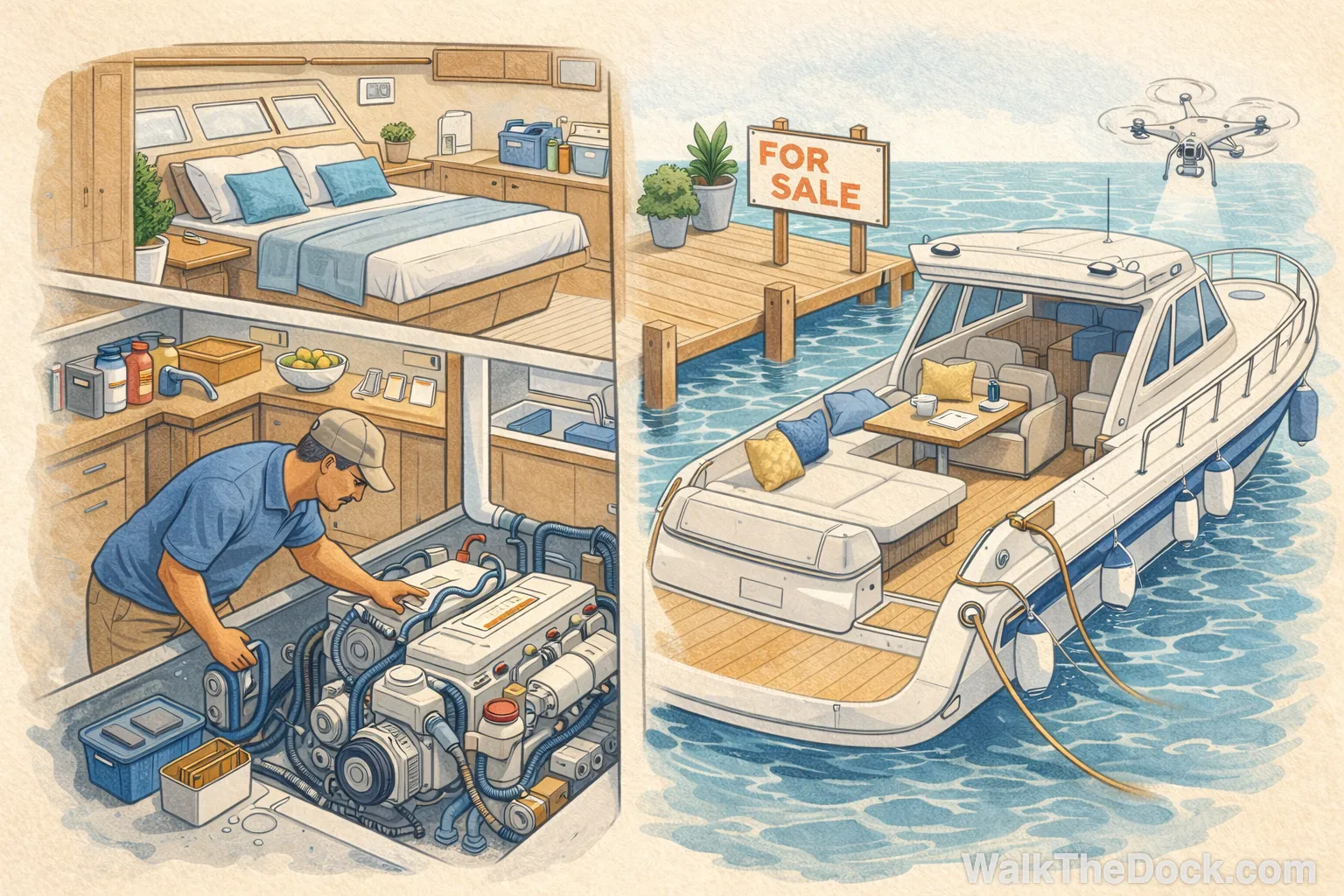
When buyers shop for a boat, they aren’t just looking at hull specs and engine hours—they’re picturing themselves onboard. They imagine the first cruise, the first weekend away, the first sunset at anchor, and the first time they proudly hand a friend a cold drink in the cockpit like they’ve been doing it forever.
That’s why staging matters.
A well-staged boat doesn’t just look better—it feels more cared for, more valuable, and more “ready to go.” And that translates directly into more inquiries, better showings, and faster, stronger offers.
The good news? You don’t need a yacht makeover budget. You don’t need a professional detail crew or designer cushions. You need a clean, calm, intentional presentation that helps buyers focus on what matters:
Here’s how to stage your boat for listing photos and in-person showings like a pro—without losing your weekends (or your sanity).
Before you organize, decorate, or think about cute throw pillows… clean first!
Dirt and grime show up brutally in photos. And buyers always notice the things owners stop seeing—especially the things that signal “this boat has been lived in hard” rather than “this boat has been cared for.”
Windows & isinglass: Clear and streak-free instantly makes the whole boat feel newer and brighter.
Floors & non-skid surfaces: Scrub out scuffs, sand, and grime, inside and out.
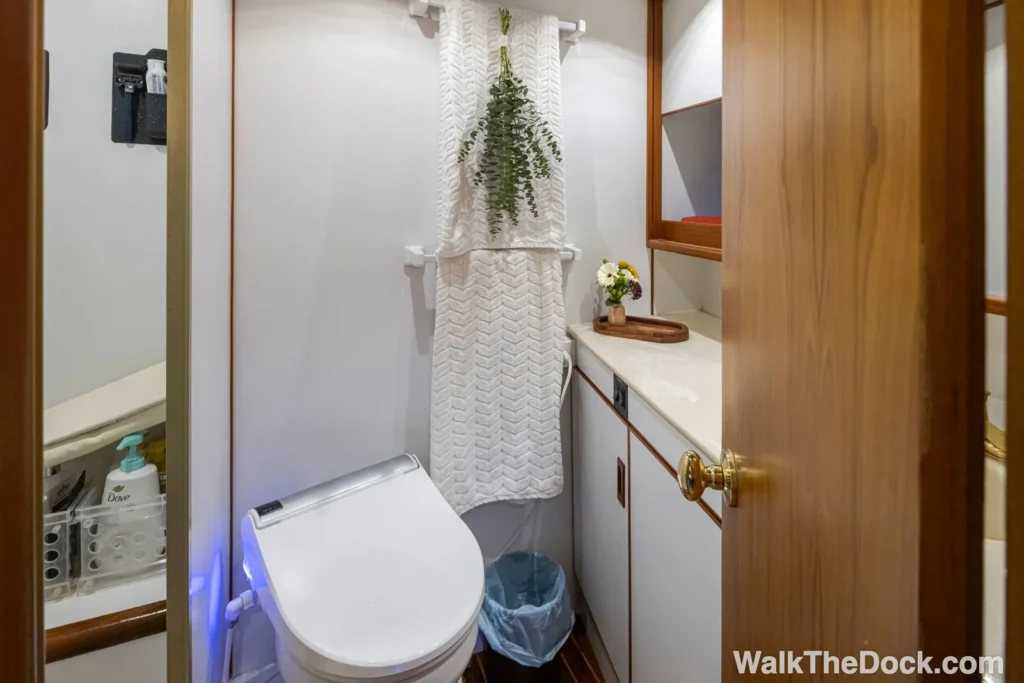
Head & sink: Shine it like a hotel bathroom.
Galley surfaces: No crumbs, stains, or mystery sticky spots.
Upholstery & cushions: Vacuum seams, spot-clean, deodorize, remove pet hair.
Bilge & engine space: You don’t need perfection—just “well maintained.”
Pro tip: A boat that smells clean feels instantly more valuable. Air it out, wipe down soft surfaces, and avoid heavy fragrance sprays. Buyers don’t love “cover-up” scents—it makes people wonder what you’re hiding.
If the boat has been closed up for a while, run fans, open hatches, and let it breathe for a day. Odors are one of the fastest ways to trigger buyer hesitation—even if everything else looks great.
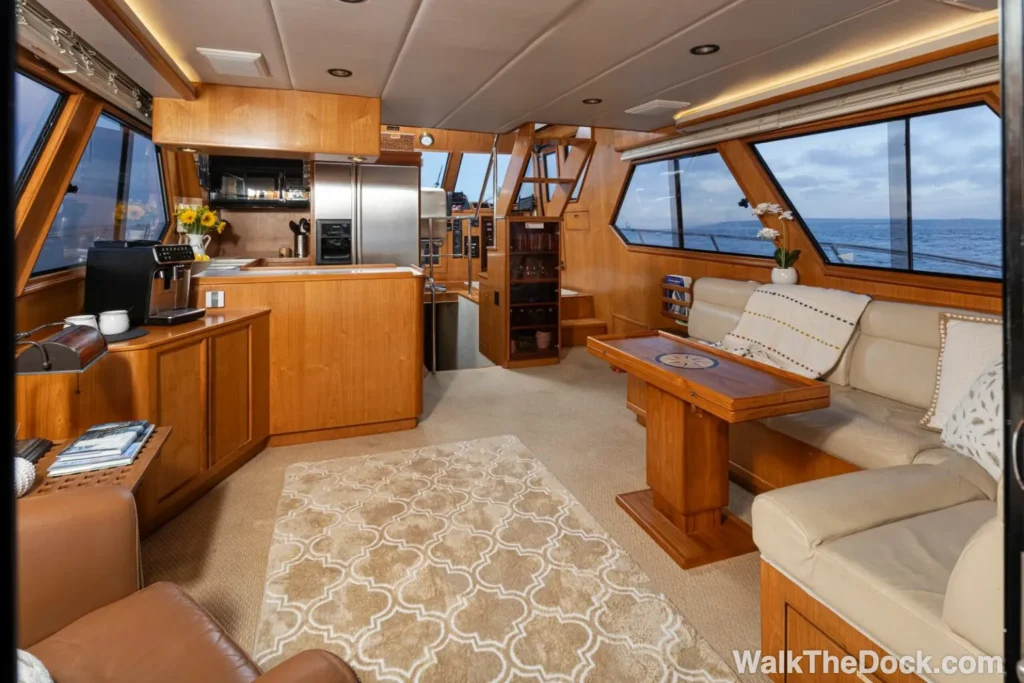
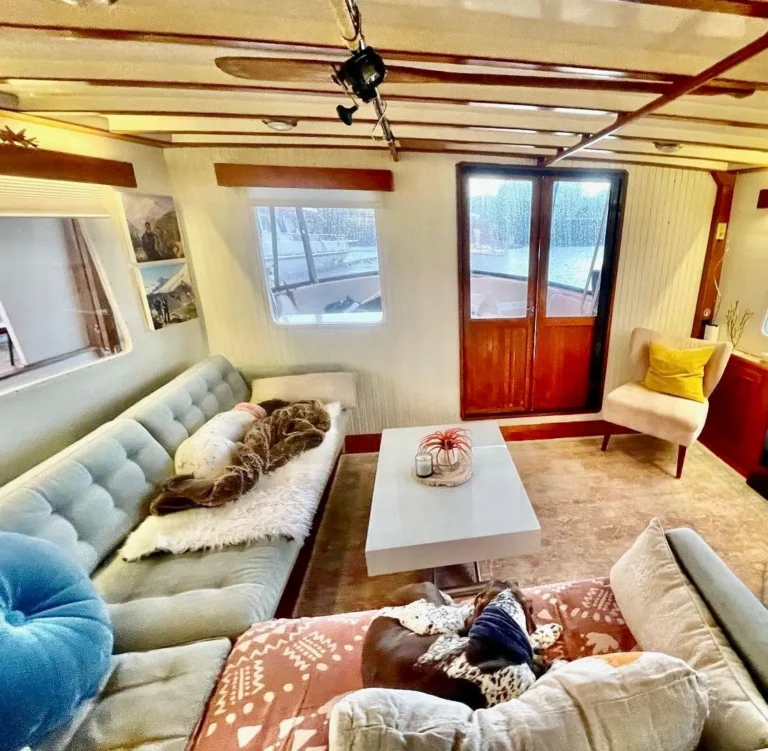
A staged boat should feel spacious, simple, and easy to maintain. Too much gear makes the boat feel smaller and distracts buyers from the layout.
Remember: buyers don’t just assess storage—they determine stress. If the boat looks chaotic, it feels like work. If it looks organized, it feels like freedom.
Personal toiletries, towels, laundry
Kids’ toys, pet items, extra shoes
Food, spices, condiments, half-used drinks
Paperwork piles, random cords, loose tools
Extra life jackets and bulky safety gear (keep required items, tidy them)
Aim for this vibe:
✅ “Weekend-ready, not lived-in.”
A simple rule that works:
If it doesn’t help sell the boat, it shouldn’t be visible in the photos.
You can keep some personality, but keep it minimal and intentional.
Your boat probably carries memories—first trips, favorite anchorages, souvenirs, shell collections; a thousand small things that make it “yours.”
But buyers need to imagine their life on it.
Depersonalizing doesn’t mean stripping it bare. It means removing cues that make the boat feel like someone else’s home.
Put away family photos
Remove name-labeled items and custom signs
Simplify décor (especially anything loud or niche)
Store your “routine stuff” (meds, toothbrushes, half-used sunscreen, etc.)
Keep a couple of tasteful touches—just not so many that it feels like someone else’s space.
If you want a guiding principle:
The boat should feel welcoming, but not occupied.
Yes—even on a boat. Especially on a boat.
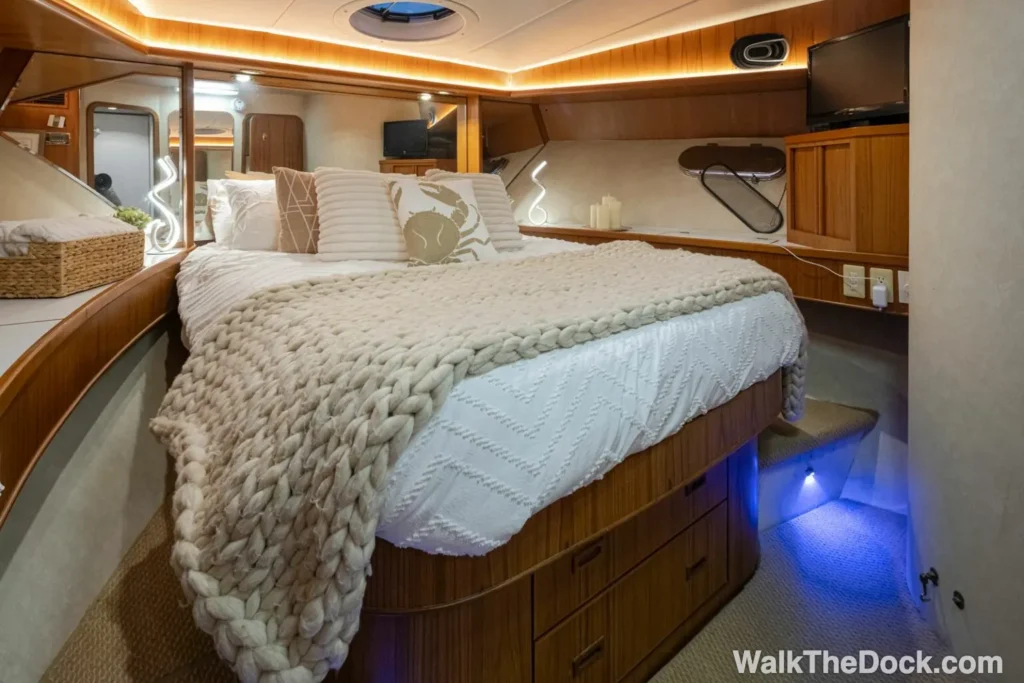
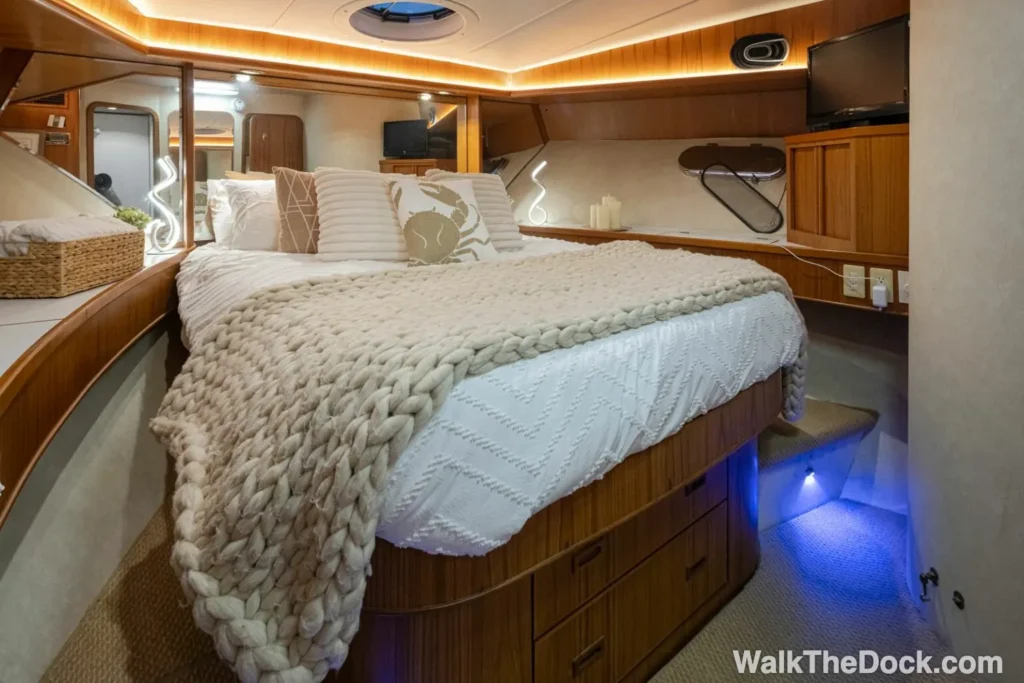
A wrinkled bunk and a pile of linens make a cabin feel cramped. A clean, made bed makes it feel like a tiny hotel room. And that’s exactly what buyers want to feel: comfort, ease, possibility.
Smooth bedding and add a clean throw blanket
Store extra pillows and bulky comforters
Set a simple dinette scene (two mugs, neutral placemat)
Add one small cozy element (small plant, basket – we’re partial to a bright, inviting bowl of lemons)
A bowl of lemons is a classic for a reason: it makes the interior feel bright, fresh, and inviting without being “decor-y.”
Clean, crisp, and intentional beats fancy every time.
Outdoor areas sell the lifestyle.
The cockpit, deck, flybridge, and swim platform are where buyers imagine:
morning coffee
sunset drinks
friends aboard
docking confidently (or at least pretending to)
Make these areas feel open and ready.
Coil lines neatly or stow them
Wash the deck and scrub away algae
Remove covers that look weathered (or clean them)
Wipe down rails
Hide loose gear (fenders, hoses, fishing items) unless it’s part of the selling point
Bonus points: If the boat has seating, set it up so people want to sit there. Make it look ready for lounging with a cocktail while watching the sunset.
The best staging doesn’t scream “staged.” It just makes people think:
“I can see myself on this boat”
Buyers interpret little things as clues about bigger things.
A burned-out light bulb feels small – but it plants a seed:
If this wasn’t handled, what else wasn’t handled?
So knock out the easy fixes. These don’t cost much, but they quietly increase trust.
Replace burned-out bulbs
Tighten loose handles/latches
Patch or clean up minor stains
Replace broken switch plates or cheap-looking parts
Clean rust spots and water marks
Make sure doors open smoothly
Confirm the head flushes properly
Think of it as “removing friction.”
Your goal is to stop buyers from getting pulled out of the dream and into doubt.
Storage is a huge selling feature—especially on cruisers, trawlers, and family boats.
Buyers open:
lockers
drawers
engine access panels
hatches
under-berth storage
…sometimes within 30 seconds of stepping aboard.
Messy lockers make buyers think:
“This boat has no room.”
“This boat is hard to live with.”
“This owner didn’t maintain it.”
Even if none of that is true.
Empty half the clutter
Group remaining items into bins
Keep one locker “lightly filled” to show usable space
You’re not trying to hide that boats require gear. You’re trying to show that the boat can handle it neatly.
Great photos aren’t about expensive cameras.
They’re about:
bright spaces
clean lines
a clear story
And the #1 photo mistake sellers make is photographing a boat like they’re trying to prove it exists, not like they’re trying to sell it.
You’re selling feeling.
Open hatches, blinds, and curtains to bring in natural light
Turn on cabin lights (warm, even brightness)
Close toilet lids and stow soaps/sponges
Hide trash cans, paper towels, and cleaning products
Make sure to make the beds
Straighten cushions and align chairs
Keep countertops almost empty
Make sure there are no dishes in the sink (this is the #1 “instant turnoff” photo)
Early morning or late afternoon
Softer light makes the boat feel warmer and more premium
Harsh noon sun (blown-out highlights, hard shadows)
Rainy days (everything looks dull)
Windy conditions (canvas flaps, clutter moves, lines look messy)
If you can, take photos on two different days:
bright, calm day for exterior
clean, well-lit day for interior
It’s worth it.
Once the boat is staged, keeping it show-ready is much easier with a quick reset routine.
Your goal is to avoid the panic-cleaning cycle that makes selling feel miserable.
Air out the cabin (5–10 minutes)
Wipe down high-touch surfaces
Empty trash and remove food/drinks
Do a final check for clutter on counters
Make sure the head is spotless
Tidy lines and cockpit seating
Turn on a few lights to brighten the interior
You want buyers to step aboard and feel:
✅ “This boat is ready to go right now.”
That feeling creates confidence—and confident buyers make offers.
First impressions start before buyers even step onboard.
They’re judging from the dock. From 30 feet away. Sometimes from the parking lot.
So treat the dockside presentation like curb appeal.
Clean the dock area near the boat
Wipe the hull stripes and transom
Make sure fenders are clean and hanging evenly
Make sure the name and registration look sharp
Straighten canvas, bimini, or covers
Remove spider webs around rails and cleats
If the boat seems loved from 20 feet away, people show up already excited.
If it looks tired from 20 feet away, you spend the whole showing trying to “explain it away.”
If there’s one area that quietly makes—or breaks—buyer confidence, it’s the engine room and mechanical spaces.
Even buyers who aren’t “engine people” will peek in, take a quick look around, and make an immediate judgment about the entire boat based on what they see. Why? Because the engine room is where maintenance habits are most apparent. A clean, organized mechanical space signals that the boat has been consistently cared for, not just cleaned up for photos.
The good news is: you don’t need to make it perfect. You want it to feel orderly, dry, and well-managed.
When a buyer opens the engine hatch, they’re scanning for clues:
Is it clean enough to inspect easily?
Does it look dry—or like it has a history of leaks?
Are hoses and wiring tidy and supported?
Do systems look cared for, or “patched together”?
Is there rust, standing water, oily residue, or corrosion?
Does it smell like diesel… or, neglect?
It’s not about showroom shine—it’s about trust.
These simple steps dramatically improve first impressions:
Degrease surfaces lightly (especially around the engines and bilge area)
Wipe up oil residue so the space looks maintained, not ignored
Remove loose tools, random parts, and old filters from view
Organize spare parts into bins (labeled if you’re feeling fancy)
Bundle and tidy hoses and cords so nothing looks tangled or temporary
Clean battery tops and terminals (dusty batteries look “forgotten”)
Check for standing water and dry the bilge if possible
Replace any burnt-out engine room lights if you have them
If there’s something you can’t fix immediately (like a slow seep at a fitting), don’t try to disguise it. Instead:
clean the area
make sure it’s visible and inspectable
be ready to explain it calmly
A clean engine room makes even small issues feel honest and manageable. A dirty one makes everything feel suspect.
One of the best staging signals you can send is simple organization:
labeled spares
neatly stored oil and coolant
manuals in a folder
clean access to strainers and seacocks
Buyers love the feeling of “I could own this boat without inheriting chaos.”
Bottom line: buyers may fall in love with the salon, but they commit when they trust the engine room.
Sometimes the most significant wins come from what you avoid.
A strong air freshener screams “masking.” Better to smell neutral and clean.
If something is broken, either fix it or disclose it. Buyers appreciate honesty, and it reduces the need for renegotiation later.
Even “nice clutter” like books, clothes, kitchen gadgets, and gear creates visual noise, making the boat feel smaller.
Showings can include strangers. Lock away anything important or personal.
If you’re in the middle of a project—pause it. Buyers don’t want to see tools out and panels removed unless it’s a serious restoration buyer (rare).
Owners see memories. Buyers see decisions.
Owners think:
“That stain isn’t a big deal.”
“That hatch just sticks sometimes.”
“We always keep the tools there.”
Buyers think:
“What else is hidden?”
“How much work is this?”
“Is this boat maintained?”
Your goal with staging isn’t to make the boat feel “perfect.” It’s to make it feel:
clean
roomy
cared for
well-maintained
ready for the next adventure
That’s what sells.
And the best part? Even if you’re still living aboard or actively using the boat, staging gives you a repeatable system that keeps things manageable.
Because selling a boat is hard enough, you shouldn’t have to do it while stepping over laundry and apologizing for the sink.
Clean. Calm. Ready.
That’s the boat buyers fall in love with.







There are no results matching your search