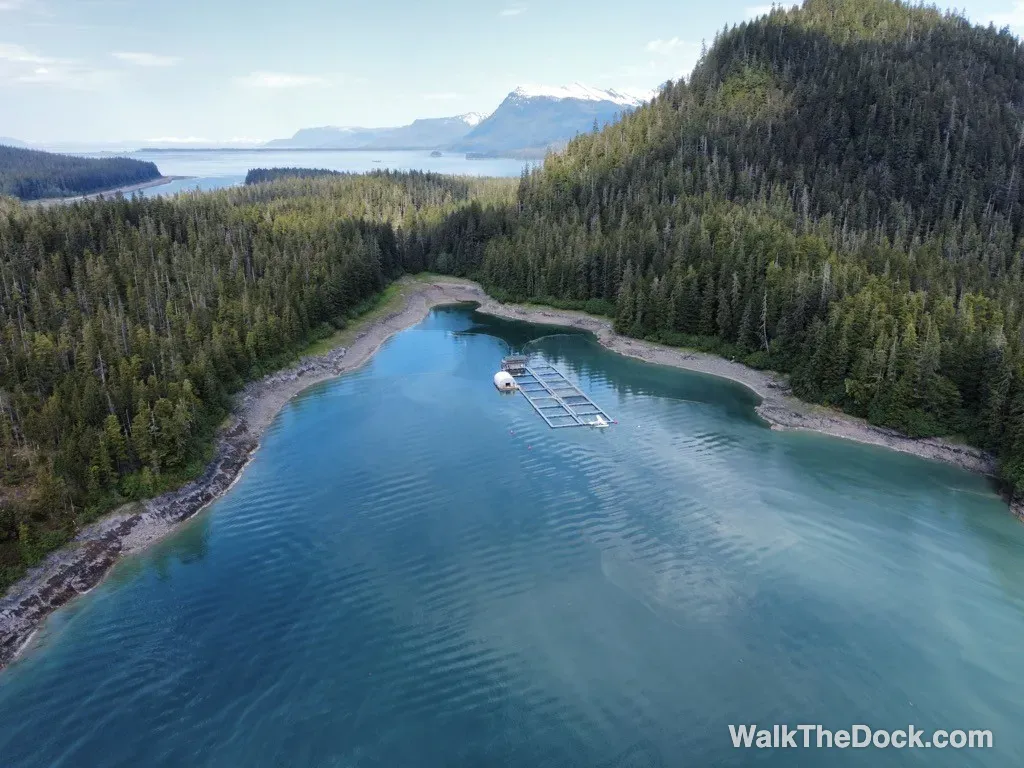
The approach from Frederick Sound is straightforward, especially compared to Wrangell Narrows.
- Wide, open entrance with no significant bar or tight channel
- Depths remain deep well into the bay
- Minimal navigation aids—this is largely pilotage by chart and eyeball
Once inside, navigation becomes more about choosing your anchoring spot than avoiding hazards.
Hazards & Considerations
1. Sudden Williwaws (Katabatic Winds)
This is the big one.
Cold air spills off the glacier and steep mountains:
- Can arrive suddenly, even on calm days
- Gusts funnel down valleys with little warning
- Strongest near the head of the bay and waterfalls
You’ll often see them before you feel them—dark streaks on the water racing toward you.
2. Glacial Influence & Debris
Especially in spring and early summer:
- Logs, branches, and “deadheads” from runoff
- Increased sediment near the head of the bay
- Reduced visibility in the water
Not a place to run fast near shore.
3. Deep Water Anchoring
Depth is both a blessing and a challenge:
- Many areas drop off quickly
- Limited swinging room in tighter coves
- Requires more scope than casual anchoring
Good ground tackle and planning matter here.
4. Rain, Fog, and Reduced Visibility
Thomas Bay is known for its persistent moisture:
- Fog can roll in from Frederick Sound
- Rain is common and can obscure landmarks
- Waterfalls multiply dramatically after rainfall (beautiful, but visibility drops)
Radar and disciplined navigation help if conditions close in.
5. Limited Escape Options
Once anchored deep inside:
- Few alternate anchorages nearby
- Conditions can shift faster than expected
- Exiting in poor visibility or strong outflow winds can be uncomfortable
Pick your weather window thoughtfully.