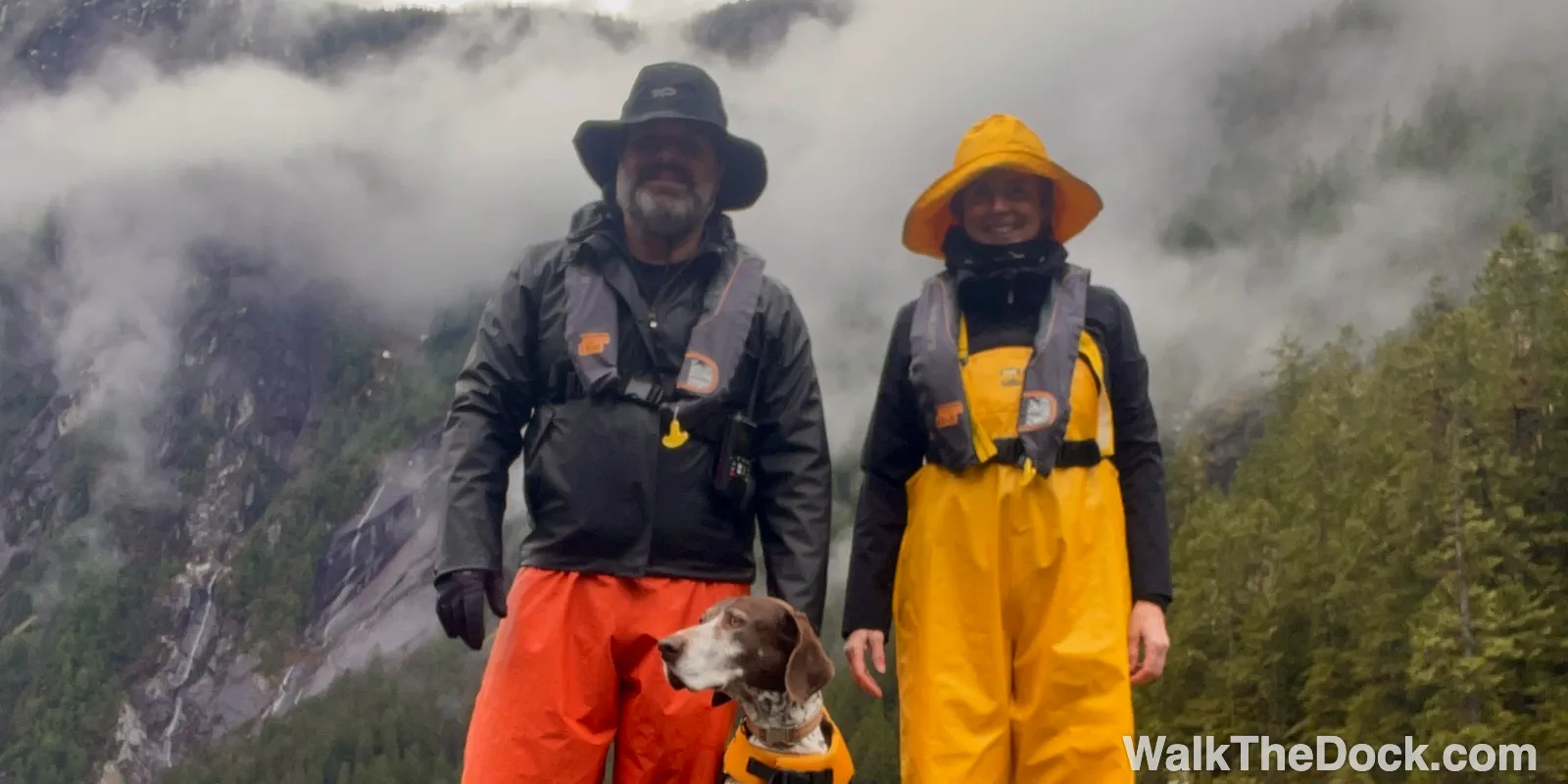
Suzanne and I didn’t set out to start WalkTheDock as a “business.” It really came from a pretty simple (and honestly frustrating) realization after years of cruising the Pacific Northwest and the Inside Passage:
There’s a ton of information out there—but almost no way to actually turn it into confidence on the water.
When we first started planning longer runs—up through the San Juans, into Desolation, and eventually the Inside Passage—we did what everyone does. We bought the books. We joined the Facebook groups. We talked to people on the docks. We read blogs. We asked questions.
And we ended up with… fragments.
A tide table here. A warning about a pass there. A “you should anchor here” comment from someone who did it once five years ago. A great story that didn’t quite translate into something actionable.
There was no shortage of data. But stitching it together into an actual cruising plan—one you felt confident executing—was a different story entirely.
We tried to lean into the online communities, especially Facebook groups. In theory, they should have been goldmines.
In reality… not so much.
You get a mix of solid advice, outdated advice, strong opinions, and—let’s be honest—some pretty questionable seamanship. It’s hard to know who actually has experience versus who’s just repeating something they heard.
And everything is buried. A great answer disappears in 48 hours. There’s no structure, no continuity, no real learning path. Just noise.
Don’t get me wrong—the cruising guides for the PNW and Inside Passage are fantastic. We still use them.
But they have a fundamental limitation: they’re static.
Conditions change. Marinas change. Anchorages shift. What was true three years ago—or even last season—might not be true now. And books can’t adapt in real time, nor can they connect the dots across a full cruising experience.
They tell you what’s there. They don’t always help you understand how to use that information in context.
Then there are reviews.
“2 stars. Anchorage was windy and I didn’t catch any fish.”
That’s not exactly actionable intelligence.
What you really want to know is:
Most reviews don’t get you there. They’re snapshots, not insights.
One of the few ways to shortcut all of this is to join a guided flotilla or pay for hands-on instruction.
And those can be great—but they’re expensive. Not everyone has the time or budget to go that route, especially for extended cruising like the Inside Passage.
So you’re left piecing things together yourself, hoping you’re not missing something important.
Here’s the part that really matters:
The Pacific Northwest and the Inside Passage are not casual cruising areas.
They’re technical.
Tides, currents, narrow passes, weather patterns, remote anchorages—this is a place where small mistakes can compound quickly. It’s high consequence.
But it’s also incredibly rewarding. Some of the most beautiful, remote, and memorable cruising anywhere in the world is right here.
That combination—high risk, high reward—means you need more than scattered information. You need understanding. You need context. You need confidence.
WalkTheDock came out of a simple idea:
What if we could bring all of this together?
Not just more information—but organized, experience-based knowledge:
We wanted to create something that sits between the books, the forums, and the dock talk—and actually connects them.
Something practical. Current. Experience-driven.
Because at the end of the day, cruising the PNW and the Inside Passage shouldn’t feel like guesswork stitched together from random sources.
It should feel like you’ve got someone walking the dock with you, saying:
“Here’s what you need to know—and here’s how to actually use it.”

There are no results matching your search